Whenever I’m in this part of France, south of Perpignan, I make sure to visit the bijou town of Ceret, nestled (the word seems appropriate and less hackneyed here) in the foothills of the Pyrenees. Famed for its association with renowned artists, and home to a terrific modern art museum, the historic center winds around the classically French square of the Place des Neuf Jets, where, indeed, a fountain with nine outlets cascades beneath a venerable plane tree. Small cafes line the square, but the object of my pilgrimage is in one corner: the Galerie Vargas is a superb mineral and fossil shop. Monsieur Vargas can best be described as a character - small and wiry, of a certain age with a pony-tail and a twinkle in his eyes. Over the years, I have got to know him quite well - certainly well enough to know that, if the shop is closed in normal business hours, I can find him in the Bar Picasso and, as long as he is not in the middle of a beer and a game of chess, induce him to open up. As two geologists, our discussions of his treasures are good for my French and his English, and always a pleasure. Those discussions and their aftermath (inevitable purchases) often go on for some time - he is regularly off to his secret locations around the world and the gallery is routinely refreshed with new wonders (his latest specialty is spectacular amber).
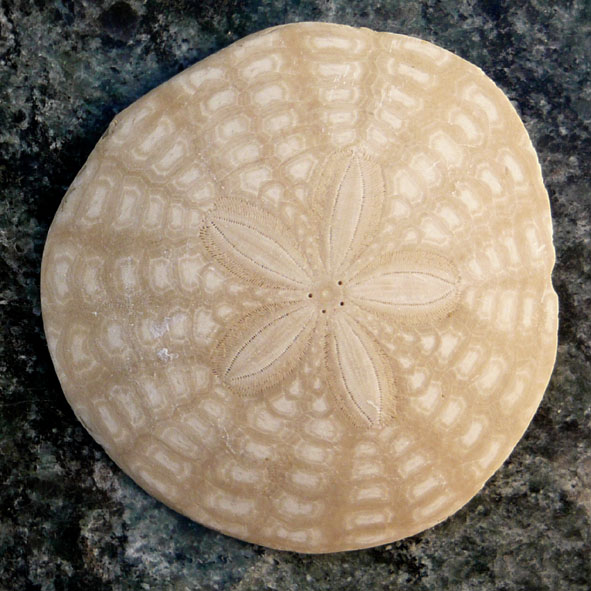 Before Christmas, my purchases were modest, all French, and connected, in one way or another, with sand. A couple of exquisitely preserved sand dollars, I think Miocene. So named to reflect their currency-like morphology and, today, their being washed up on sandy beaches, they are, of course, echinoderms, relatives of the sea urchins, creatures that inspired my early interest in paleontology, an enthusiasm that was soon beaten out of me as a student by the sheer weight of terminology and classification. I found early echinoderms particularly interesting simply because of the bizarre and seemingly toxic relationship between their mouth and their anus; but, of course, they evolved to sort this out and go on to be a great success. Modern sand dollars tend, when alive, to be a rather delicate purple color and remarkably adept at burrowing their way into the sand of the shallow marine seabed, feeding on the incredible diversity of minute organisms that make the spaces between the grains their world. The rhythms and diversity of echinoderm designs is compelling, as is their evolutionary success story.
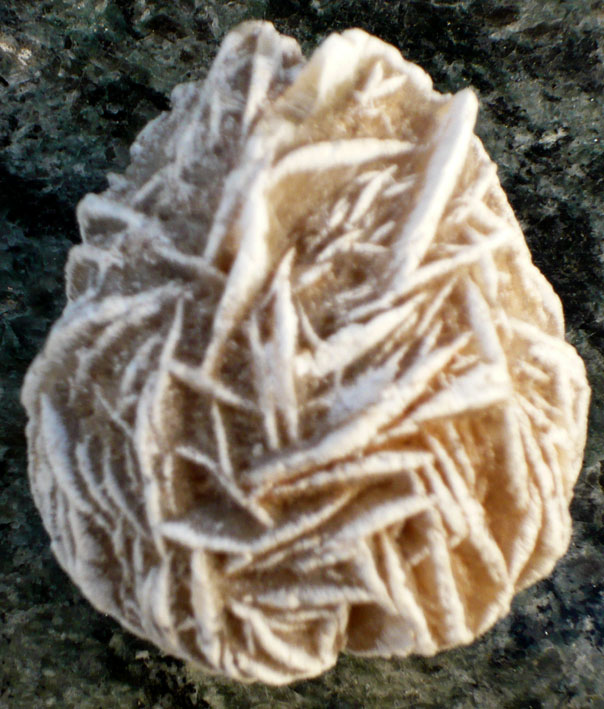
Monsieur Vargas also had, in a humble brown cardboard box on the floor, a glorious garden of desert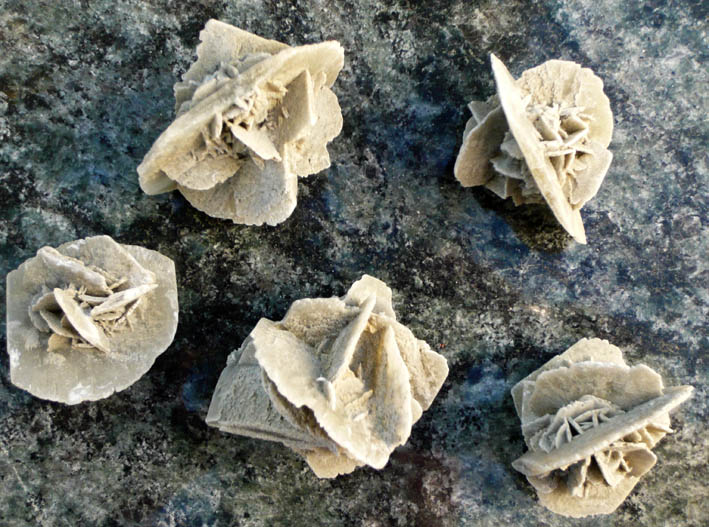 for an interesting survey of body part mimetoliths.
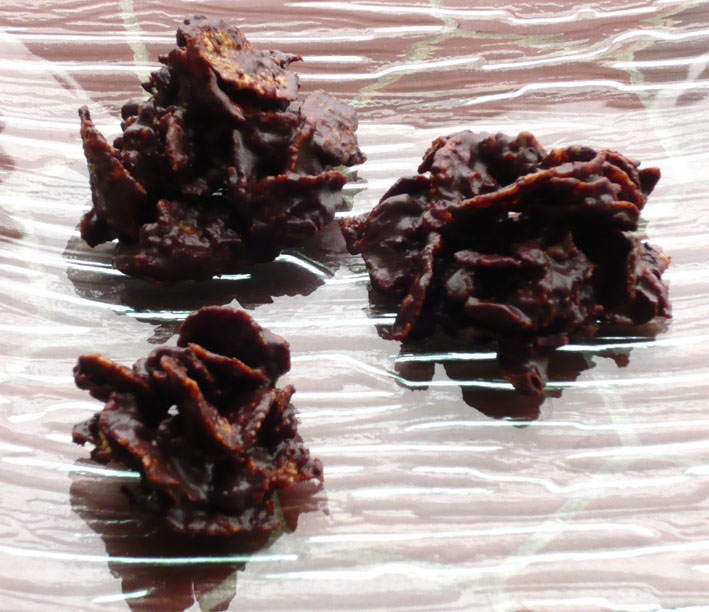
And, finally, following mimetolithic seasonal inspiration, and after she had baked sand cookies (sables being the French version of shortbread), my wife whipped up a batch of desert rose cookies, roses des sables, which are, I suppose, culinomimetoliths - or not, as the case may be. But they are delicious (easy recipe available free on request).
Comments
No comments yet.