I try to make a point of watching all movies that feature sand in a significant role (probably the subject of a future post), and my 88-year-old father-in-law who lives in Philadelphia recently told me of  , it features some remarkable scenes of sediment movement. It was filmed in what is now the Anza-Borrego State Park and the dunes beside the Salton Sea, the area that was then the army’s California Desert Training Center. In the scene that my father-in-law was referring to, a lone and desperate soldier attempts in vain to climb the steep face of a dune, the sand cascading, sliding, and avalanching constantly around him - just before, miraculously, a British patrol arrives out of, literally, nowhere.
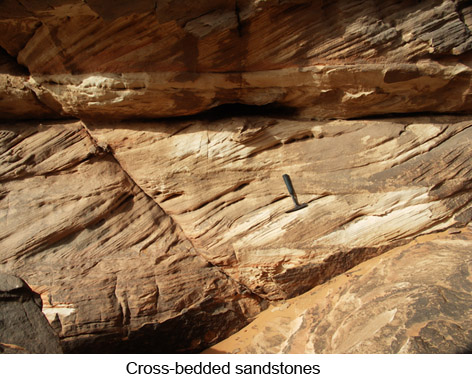
So there I was, back in the strange world of granular materials and piles of sand, any one of which has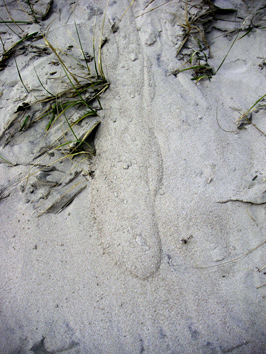 , small-scale features on the beach, landslides, or the determining factor in the internal structure of sand ripples and banks - cross bedding - that tells us so much about chapters in the Earth’s history.
But it’s also important in our daily lives - and not just in the kitchen.
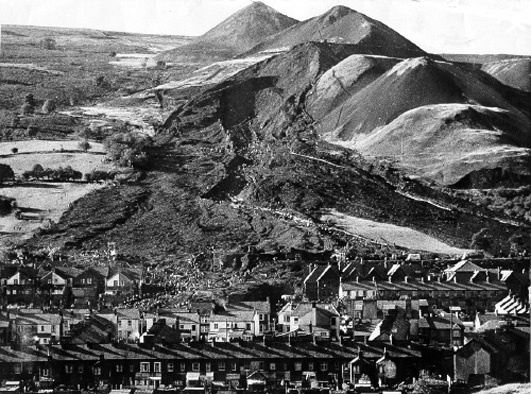
Anywhere that granular materials are stored, whether it be in silos or in piles of aggregates, mining products, or cereals, the angle of repose - and its sensitivity to changing conditions - is something that needs to be carefully managed. Failure of the slope of a sand pile is a regular cause of tragedies on the beach and gold mining in placer deposits, not to mention in the sand mines of Long Island (previous post). The failure to properly manage the gigantic tips of refuse from the coal mines of Wales resulted in the appalling tragedy at Aberfan in 1966, where the collapse of one of those manmade mountains killed 144 people, including 116 children in the buried school.
But on a lighter note, the angle of repose would seem to be something well-understood by various critters, notably the antlion, sometimes referred to as the sand dragon. The antlion is the larval stage of a large family of insects, the Myrmeleontidae, the adults of which are quite attractive four-winged creatures. But the larval stage - and they can remain larval for several years - are fearsome predators. The 2000 or so species occur around the world, known colloquially in North America as doodlebugs, since their rambling tracks in the sand resemble doodles on paper. Doodlebugs love the angle of repose and use if very effectively in obtaining their dinner. An antlionwill excavate, backwards, a pit in the sand and bury itself at the bottom, its voracious and venom-laden jaws poised for a visitor. The visitor - an ant or any other victim for the undiscriminating antlion - will fall into the pit and struggle in vain to escape against the angle of repose of the sides. Its struggles are further thwarted by the antlion throwing jawfuls of sand at it, precipitating further avalanches, until dinner is served (there’s a great video of this drama here)
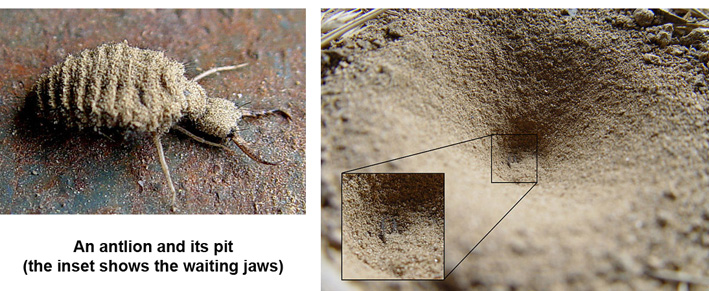
Oh, and when it’s finally ready to move on in its development, the antlion will spin silk from its posterior and use it to glue together a cocoon of sand grains for its pupal stage.
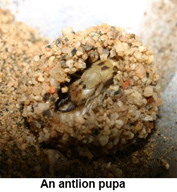
[antlion and pit images, courtesy of Scott Robinson, pupa image,Jonathan Numer, Creative Commons Licenses; Aberfan image and detailed information from Iain McLean & Martin Johnes, http://www.nuffield.ox.ac.uk/politics/aberfan/home.htm]
Comments
Excellent post! And I love your description of doodlebugs. I had a colleague once who would always bend over an antlion’s den and yell, “Up up, doodlebug, up up!” About 1/3 of the time, the doodlebug would poke it’s head out - I don’t know if it was the sound vibrating the sand, or just coincidence.
We see many of those interesting antlion pits in the Carolina Sandhills. I will have to try that yell, Silver Fox and see what happens!
Interesting What is the angle of repose for mined rock?
It all depends on the character of the rock since the angle of repose is directly dependent on the friction between the fragments - large, angular fragments (which mined materials generally are) have a high natural angle of repose, often around 40 degrees. Then add water, reduce the friction, and that angle is no longer stable so natural landslides and manmade disasters like Aberfan are the result.