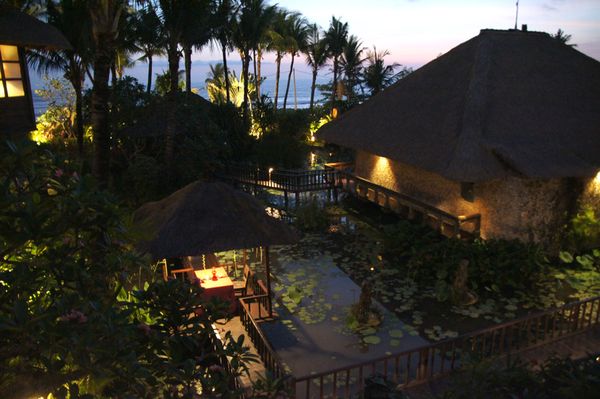
A week shipboard, tossed about in a small cabin, simple and basic, always creaking, and with the ever-present and heady aroma of diesel fumes (I won’t go into any details on the bathroom), was worth every minute for the experience and the spectacular places visited. But, by the time we returned to Bali (before the earthquake), a little landlubber luxury was definitely in order. This we attained superbly with a two-night stay at the Tugu Hotel in Canggu, blissfully removed from the manic hustle and traffic of Kuta and Denpasar. This kind of quintessentially Indonesian hotel, with its superb rooms, excellent food, beautiful grounds, and ever-attentive and friendly staff, comes, of course at a price – but a price that would nevertheless secure you not very much by way of a New York or London hotel, and a price that was worth every rupiah. And, while this blog is explicitly non-commercial, I can only recommend the Tugu as a gloriously different place to stay. As a flavour of what I mean, here, taken from our room (using the amazing “hand-held twilight” noise reduction function of my new toy), is the setting for our dinner the first night, next to the lotus pond, listening to the sound of the surf:
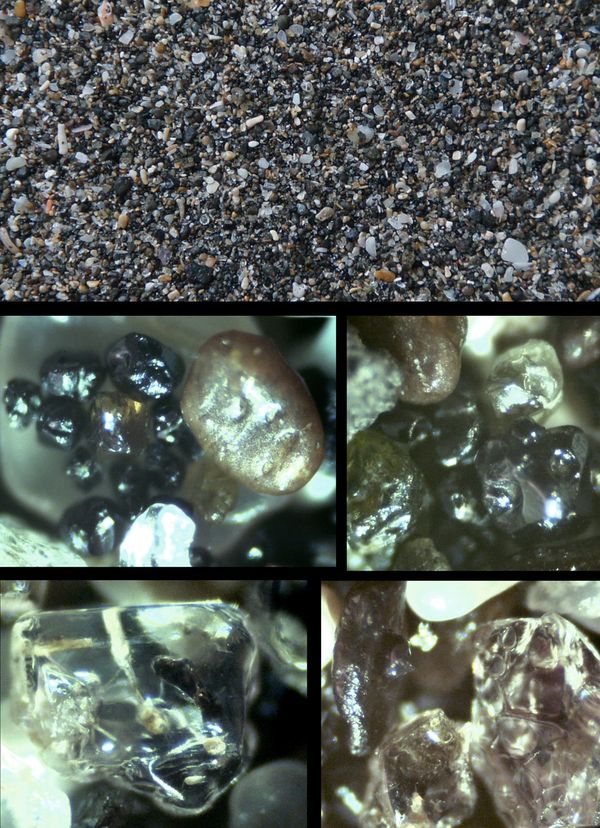
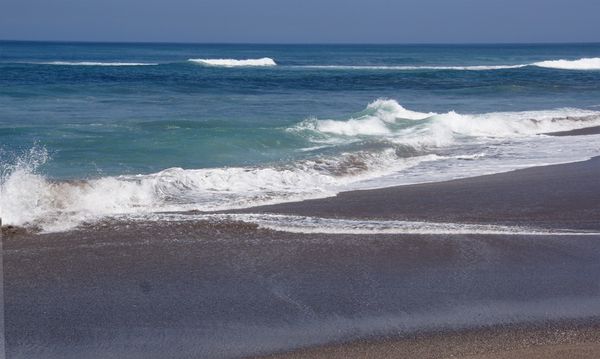
Which, inevitably, brings me to the shore. The surf was up and the surfers were out, but my focus was, of course, on the details of the beach. Here, the sand is a chromatically dramatic mix of glistening black volcanic grains (with occasional apple-green glints of the mineral olivine), glittering quartz, shell fragments, and our ubiquitous friends, the foraminifera.
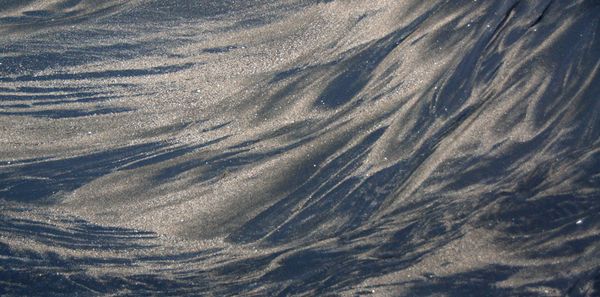
This palette, when used by the constant brush of the waves, yields delightful beach patterns. But, better still, where a stream comes down to the beach, and the heavier black volcanic grains behave differently from their lighter-weight colleagues (the placer effect of granular segregation), then things become quite spectacular.
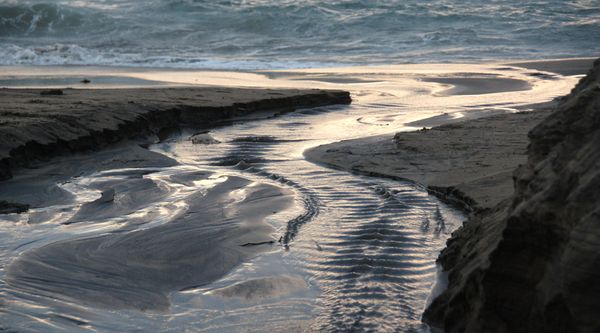
This stream had carved out a miniature valley, revealing the old layers of storm sands that constantly avalanched down into the flow, a small-scale animated exhibit of earth surface processes.
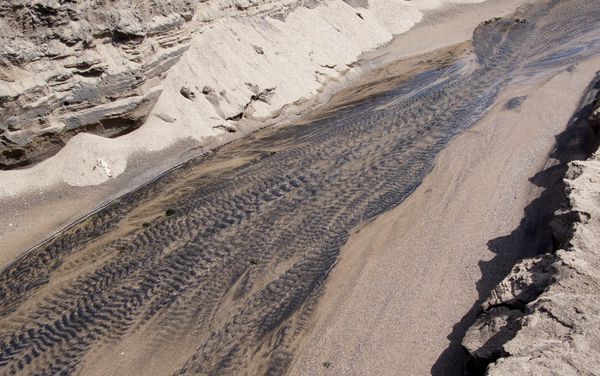
And then the stream flow went to to work transporting and sorting the sand, sculpting it into ripples and small dunes, each structure graphically defined by the dark and light grains. A dynamic, shape-shifting system – and, being the areno-nerd that I am, I spent some time simply watching the ripples move, forming and re-forming, swirling and migrating. And here’s the movie:
Once carried down to the shore, the sand is then entered in a new transportation game, and becomes the massive cargo of unceasing wave action.
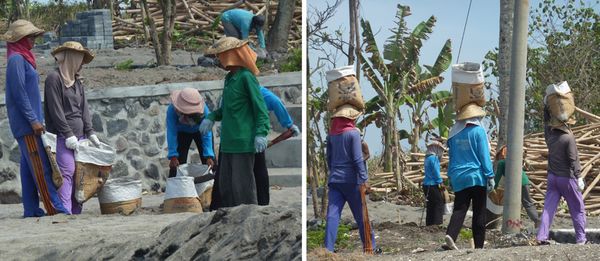
This being Indonesia, Tugu Beach is not simply a place for surfers and basking tourists – it is a hive of entrepreneurial (and undoubtedly illegal) activity. Sand is a valuable commodity here, and there was an industrious group of women (who, traditionally, do all the hard work in Bali), digging up sand, filling bags, and then taking them away by carrying them on their heads:
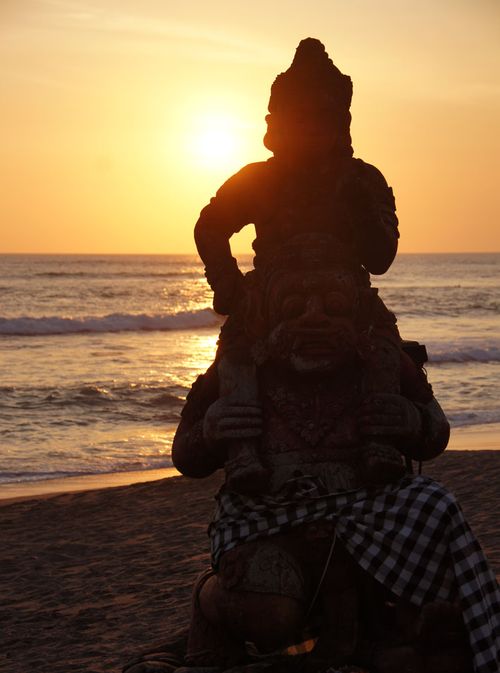
Every day in Indonesia brings some new experiences, some unexpected surprises – Tugu Beach proved to be a place where all of these were pleasurable.
Comments
Thanks especially for the video; I LOVE to watch ripples. Beautiful photos. You obviously enjoyed yourself, especially in the resort.