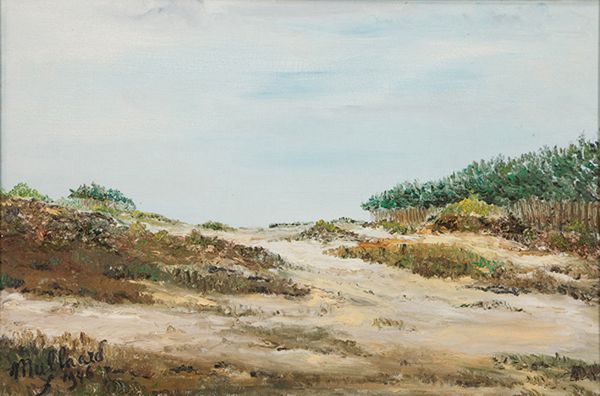
A while ago, I wrote a couple of posts on “the European sand belt, a great swathe of lowlands covered, more or less, by aeolian sand deposits originating from the chaos left behind by the retreat of the Ice Age glaciers,” the second with a focus on the Dutch dunes of Hulshorst in the Veluwe region. Recently, I was delighted to see a new comment on this post, from Francien Solitar, who wrote:
My stepdad was P.H.Mullaard. He lived in Ermelo and painted the Hulshorster zanddunes in more than one painting. (see: Mullaard.com) He spoke with a forest keeper there and he was told that, when there is a thunderstorm in the area, there seems to be an unusual amount of lightning flashes that hit the dunes and make craters in the ground.
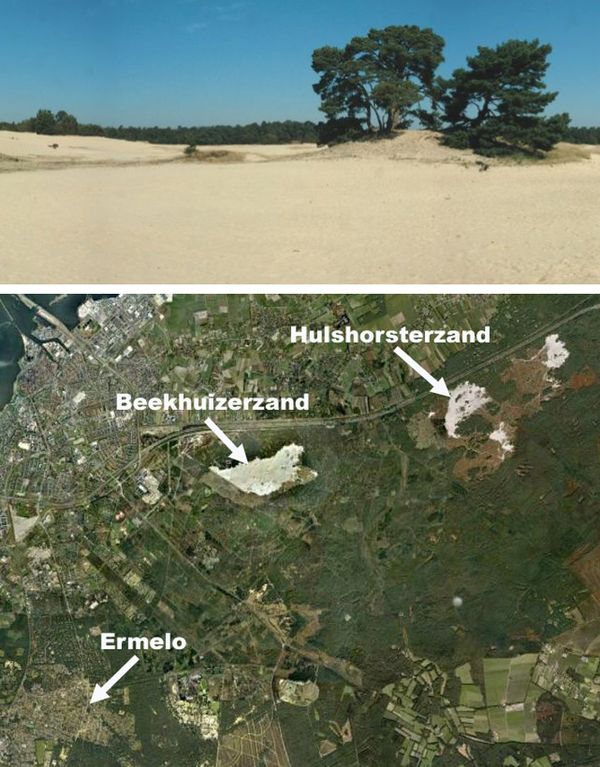
I immediately went to the website that Francien is developing, showcasing Piet Mullaard’s works, and at the same time took the liberty of contacting her by email. This is yet another of those immensely satisfying “out of the blue” contacts that arise through the blog, and Francien responded immediately and graciously. She lived in the town of Ermelo (see the image below), and was a schoolteacher there before later emigrating to Canada in 1976.
As the website describes, “Piet Mullaard was born in Rotterdam, the  .
.
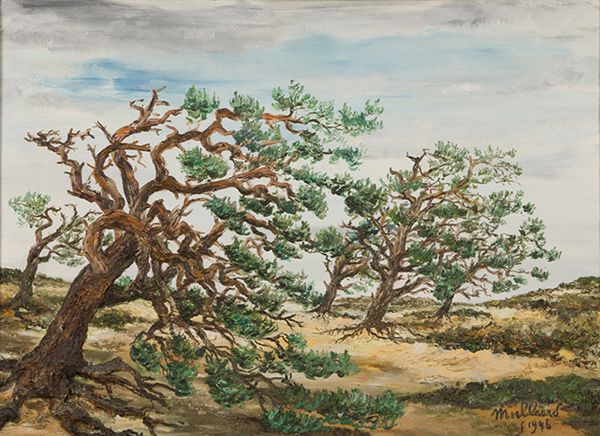
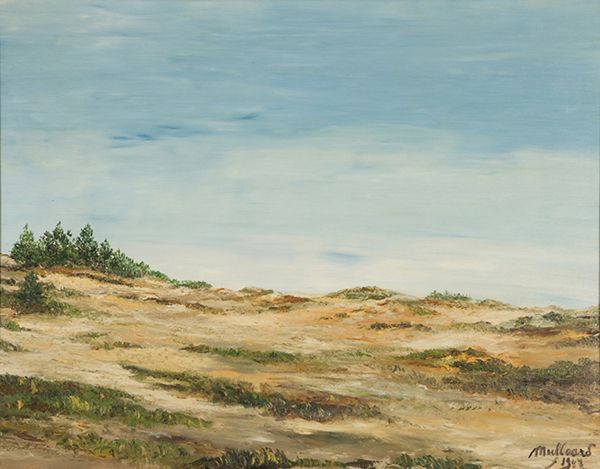
These are wonderfully atmospheric paintings in the great Dutch tradition, and a very satisfying link between landscapes, geology, sand, and art – thanks, Francien, for drawing our attention to your stepfather’s work!
[Photo with the Google Earth image from the Ministerie van Economische Zaken, Landbouw, en Innovatie website.]
Comments
The paintings are beautiful, and the website itself has a very nice design.
I’m always surprised in regard to all the places sand manages to be found.
These are marvelous paintings, thank you Francien. It’s good to know that you have made them available, because they deserve to be widely admired.
The forms remind me, although the handling is very different and personal, of some work by Caspar David Friedrich, who grew up in Greifswald, just east of the Stralsund on the Greifswald Bay, and was taken by his first art teacher to sketch the landscapes there. Somebody could do an interesting study of childhood landscapes and painting styles: Mullaard and Friedrich from the Sand Belt, Constable from Suffolk, Monet on the beaches of Normandy…
Really beautiful art!