So, my first blog and my first post – an intimidating moment, and, obviously, one where I should try to set out the background and my aspirations. In the first instance, this is a blog about sand, and I can already visualise your cursor positioning itself over the “back” button – but please hang on a minute. Sand is, indeed, a humble material, but there is an awful lot of it about and it plays starring roles in the workings of our planet and in our daily lives. My starting point is that sand is an unsung hero – and somebody needs to sing about it (in many dune-fields of the world sand actually sings to itself, but that’s another story). So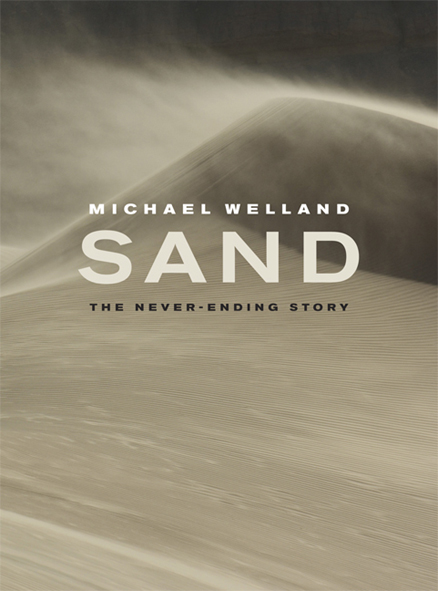 now, upfront, I will admit that I have tried, not to sing, but to write some of sand’s heroic and everyday tales in a book, Sand: The Never-Ending Story, which is just back from the printers (now there was a moment to remember). It will be published by the University of California Press in January - http://www.ucpress.edu/books/pages/10955.php. Oxford University Press will be putting out the UK edition in July.
So yes, part of my ambition for this blog is to draw attention to the book, but my aspirations are much more than that. For a start, I surprised even myself by realising how much there was that I had to leave out of the book – editing was a much bigger challenge than thinking of stuff to include. And second, there was a day when I had to stop writing, and yet so many topics have arisen and events occurred since then, that I keep finding myself saying “I wish that I’d had the chance to include that.” So, in part, this blog is intended to fill those gaps.
And then, during the long process of literary gestation (otherwise known as the hard graft of research and writing), I was really delighted to discover the global extent of the community that shared my enthusiasm for sand, and, along the way, to have actually made some converts, people whose first reaction was to press the back button, but who ended up being surprised and intrigued. This blog is for all those people – and, I hope, a whole lot more enthusiasts and converts who will share this place for conversation and debate.
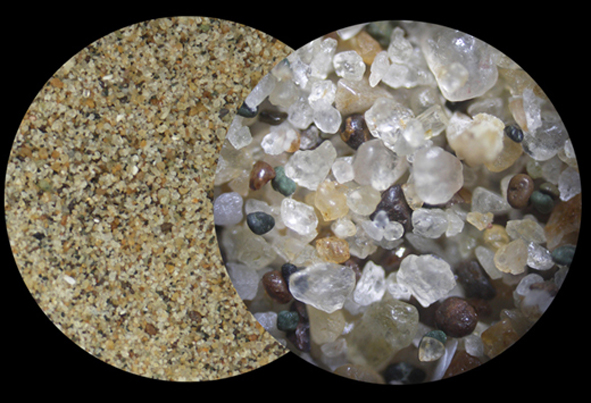 So what we will we converse and debate about? One of the origins of the book is the idea of the stories that sandgrains have to tell – as individuals, families, tribes and societies. Around a billion sand grains are born every second around the earth, and each one embarks on a journey in the company of trillions of its colleagues. Journeys are stories, and those stories become linked, become sagas, become epics of our planet – and of our lives. It’s not just the dramatic stories of islands and homes disappearing during a hurricane, or villages being buried under sand dunes, but small, incremental, everyday stories of change and influence. One of the most satisfying things about writing the book was the discovery of these stories, these journeys, and the surprising places they lead. You may wonder what on earth I’m talking about, so let me give you an example.
Sand in the news.
Launched in 1967, the QE2 spent her life as the world’s premier passenger ship, plying the oceans of the world, but particularly maintaining the Atlantic link between the UK and the US. As a young kid, I had first arrived in New York aboard the RMS Caronia, of the QE2’s old relatives – I actually learned to swim in the middle of the Atlantic (in the pool on board). The QE2 is huge and magnificent, viewed by a nation of dwindling influence as a symbol of our mighty seafaring heritage. But she has retired (or been retired) after journeying five and a half million miles. Last week, she set out from the historic port of Southampton on her retirement voyage – and promptly ran aground. “Shipwrecked in the sand” cried one newspaper headline (the article went on to suggest that this was a sign that the ship should not leave the UK). Well, not exactly shipwrecked – strong winds blew her onto a sandbank and several tugs and a rising tide soon liberated her. The sandbank in question is famous for a number of reasons. Southampton sits, like many ports, at the head of an estuary, estuaries being good, sheltered access routes to the mainland – think of the historical role of the Chesapeake Bay. But estuaries are, by nature, sites of turmoil and the constant battle between tides and rivers – and therefore the scenes of shifting sands. The Brambles Sandbank, which snared the QE2, sits squarely in the middle of the estuary – and the shipping lanes – and is, for most of the year, just below the surface. Every once in a while, when tides are low, the Brambles bank emerges above the waves and two local sailing clubs converge on its brief and damp expanse, set up a bar (not a sand bar) – and play a game of cricket. Not long ago, a Dutch sailor, having stranded himself on the Brambles Bank, spotted the approaching flotilla and assumed that they were coming to his rescue; he was astonished to find that this was a sporting event – and, presumably like many people, quite at a loss as to the rules of the game (some good pictures of this mad dogs and Englishmen event here).
A single sand grain is a wondrous thing (remember the words of William Blake), benign (except when it gets in your eye or penetrates other anatomical sensitivities). But when it gathers together with unimaginable numbers of its colleagues, the whole is greater than the sum of the parts. The Brambles bank simply toyed with the QE2, but sandbanks have caused countless real and tragic shipwrecks over the centuries. The only pieces of wreckage traceable to the swordfishing boat, the Andrea Gail, after “The Perfect Storm,” were found washed up on Sable Island, the emergent part of a gigantic sandbank off the coast of Newfoundland. The island competes with a number of other locations for the title of “graveyard of the Atlantic.”
But now I’m wandering off on one of those journeys. The great irony of the QE2’s retirement voyage? She is off to Dubai, to serve out her days as a hotel and museum, moored off the Palm Jumeirah, the largest man-made island in the world, constructed – insanely - from sand. The island resort, representing some of the world’s most expensive real estate, just officially opened in an extravaganza of fireworks and celebrity-festooned razzamatazz.
Comments
I love sand too!
Look forward to reading your blog (and book).