The termination of the seemingly endless stretch of beach and dunes that forms the Atlantic boundary of the Bordeaux region is Cap Ferret, a constantly changing and migrating spit of sand. This guards the entrance to the Bay of Arcachon, a sweeping tidal expanse of sand and mud, and a source of excellent oysters.
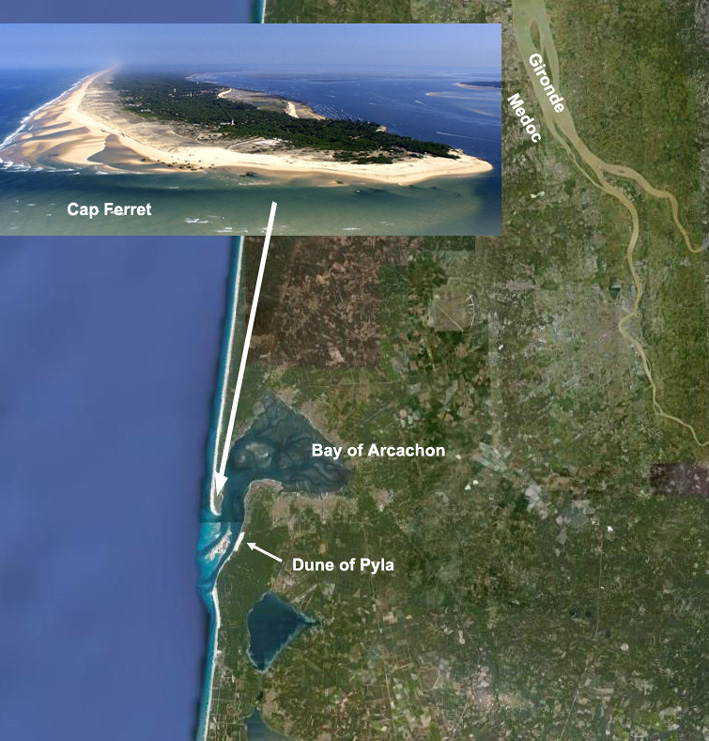
My arrival at Cap Ferret was serendipitous in two ways: it stopped raining and the tide was well on the way out (a condition referred to ominously in French as le reflux). I walked past diverse attempts to stabilise the dunes, and warning signs on the risks of “collapsing” and dangerous beaches in the no-access area towards the end of the cape (with suitable polite apologies for the inconvenience), and came upon an extraordinary sight.
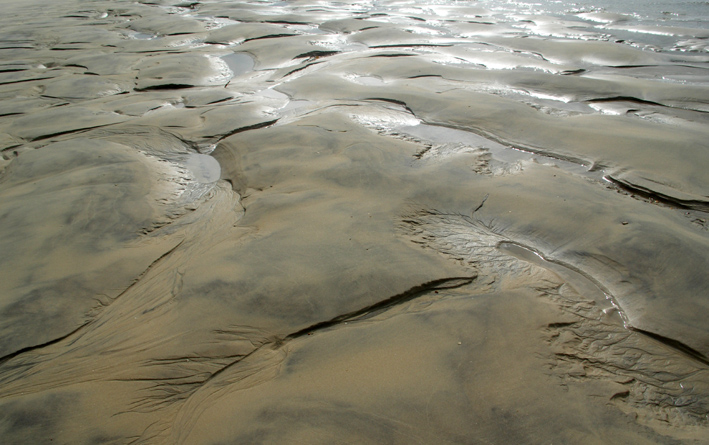
The massive and relentless movement of sand around the cape was reflected in a miniature landscape of shifting designs left behind by the tide and actively sculpted by the water draining down the beach.
A complex pattern of larger sand waves contained within it ripples, valleys, canyons, meanders, deltas, braided channels, point bars, channel bars - lilliputian river systems, actively eroding, transporting, and carving their topography before my eyes. The sand contained a significant proportion of dark minerals, heavier than the quartz grains, which, like the granular segregation of placer deposits, etched out the details and designs of these landscapes. Natural processes operating without heed to scale, features a meter across that could be images from Google Earth - truly fractal designs. I lost track of how many photographs I took - every few steps there was something different and wondrous going on (including the sensation of being sucked into almost quicksand). Endless complexity and beauty: here, just a sampling.
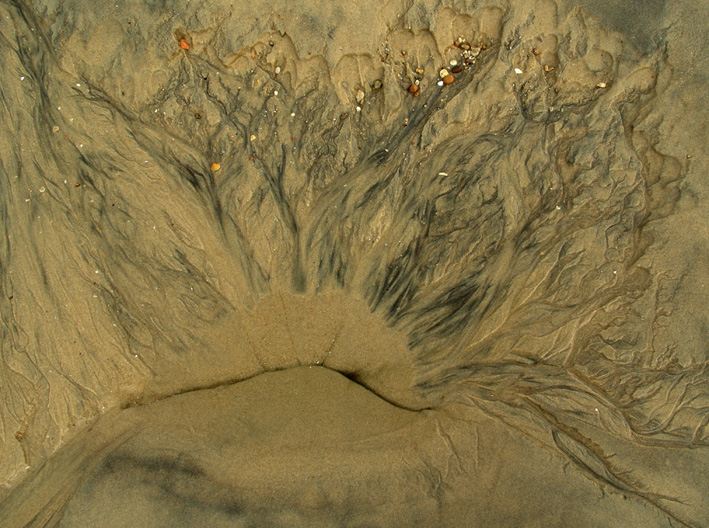
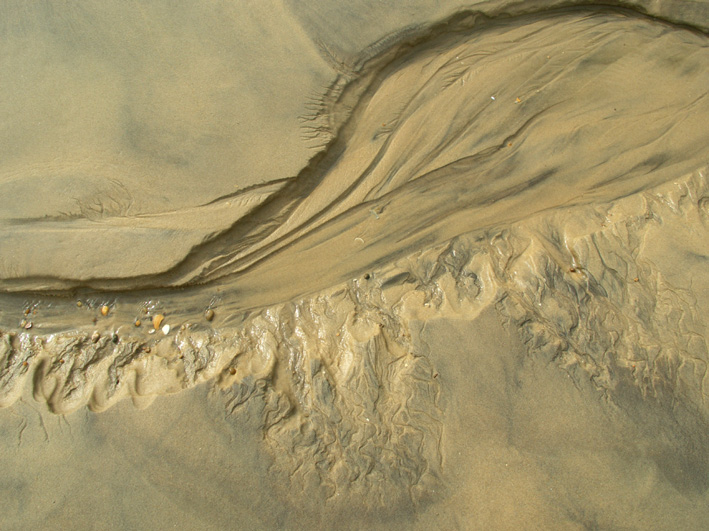
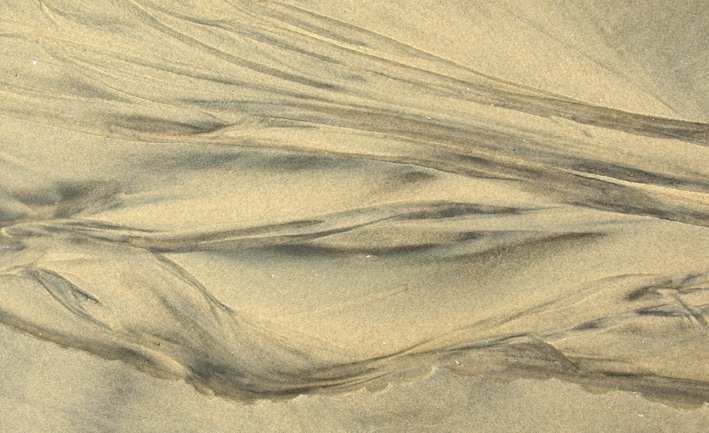
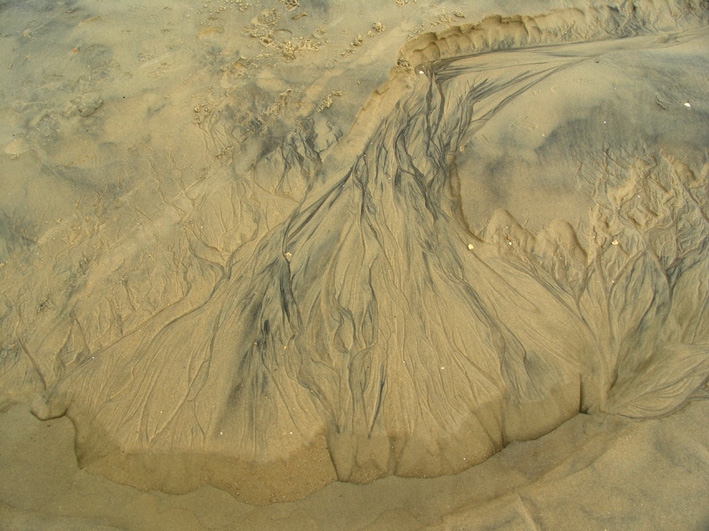
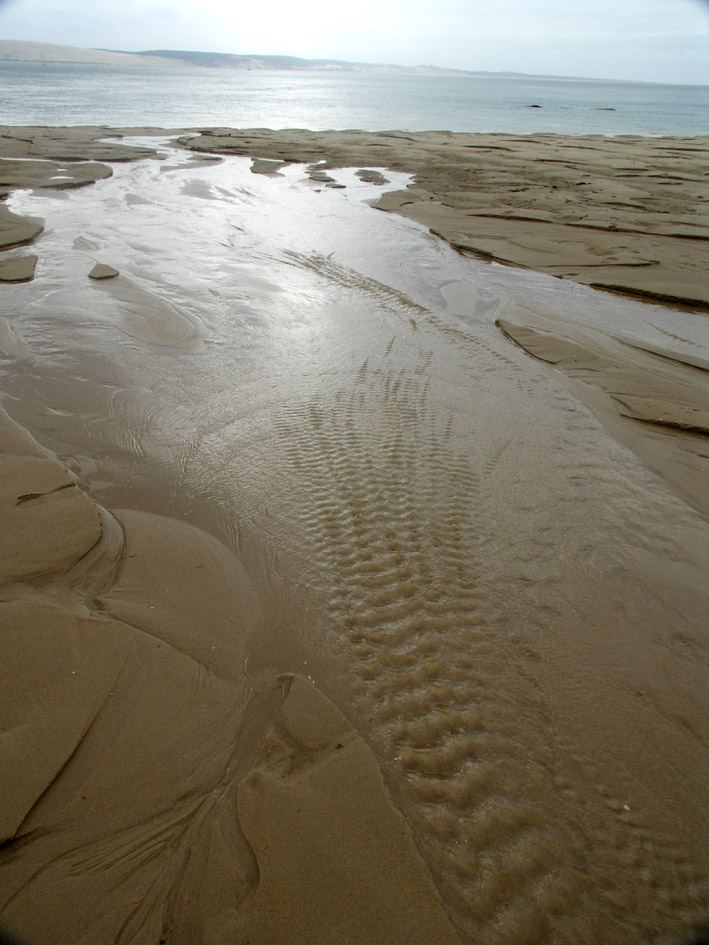
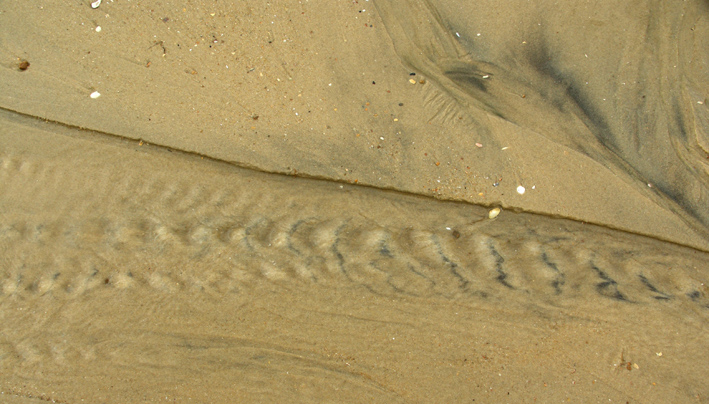
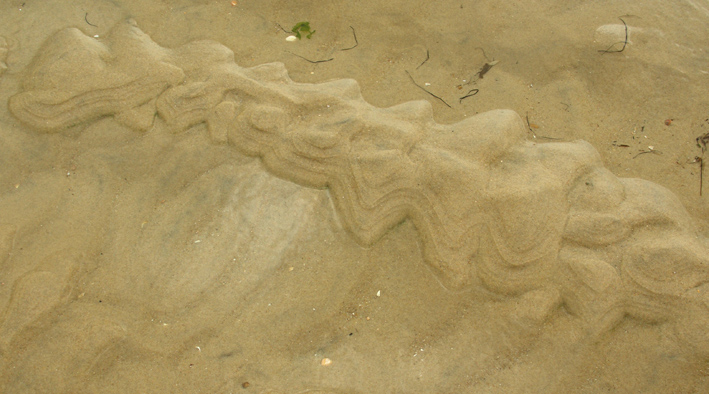
And it struck me that I was in the midst of a vast natural sedimentological laboratory, an ideal and exciting place to examine the complexity and dynamism of natural processes and structures, in the same way that Steve Gough does at Little River Research and Design, or like the model systems at the University of Minnesota’s St. Anthony Falls Laboratory. Except that Cap Ferret is much, much, bigger and the landscapes change with every reflux.
Comments
Beautiful images, thanks!