Some years ago, while researching the Sand book and indulging in one of my favourite ways to while away substantial amounts of time, I was rambling around Google Earth, investigating the dunes of Australia’s vast interior, when I came across images such as this:
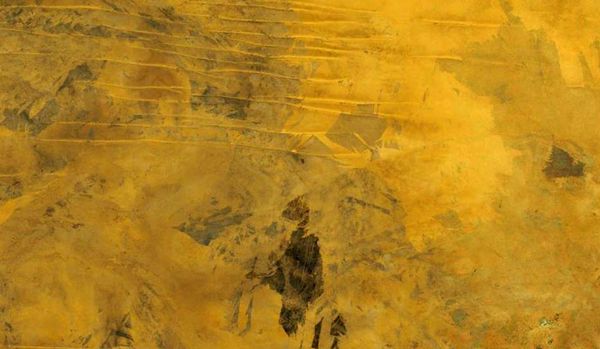
Yes, there are those mega-striations of the endless longitudinal dunes (the entire continent hardly bothers with any other kind), but what on earth (so to speak) are those bizarre geometrical patterns? Swaths of greys, blacks, and yellows, as if an angular paintbrush had swept the landscapes. The blacks, of course, are a clue, but now I understand very clearly, having spent time in the midst of this painting: fire.
What I hadn’t really appreciated those years ago, was just how vegetated much of Australia’s desert outback is, and how easily fire takes hold, interrupted only by the natural fire breaks, such as dry stream beds, or the unnatural ones of roads and tracks. The vegetation is extraordinary, cleverly adapted to aridity, and hardy in the face of not only the absence of water, but the presence of fire.
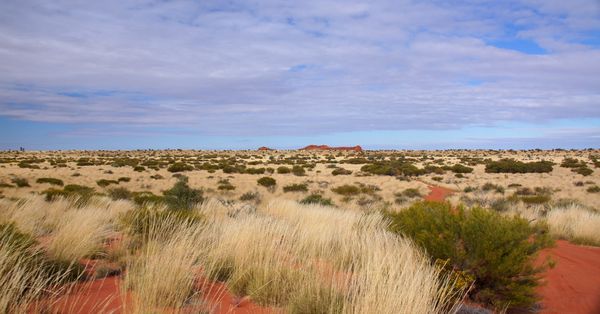
Now, although the diversity of this vegetation is remarkable, there is one dominant plant: spinifex. Well, actually it’s not spinifex, but that’s what it has been called for a couple of hundred years, even though it is actually Triodia, a genus of hummock-forming grass endemic to Australia – there are reported to be 64 species. True spinifex is a coastal grass, but Triodia has successfully usurped the name as well as the landscape. It grows everywhere, its green clumps and fine waving stems proclaiming its dominance of the botanical demography:
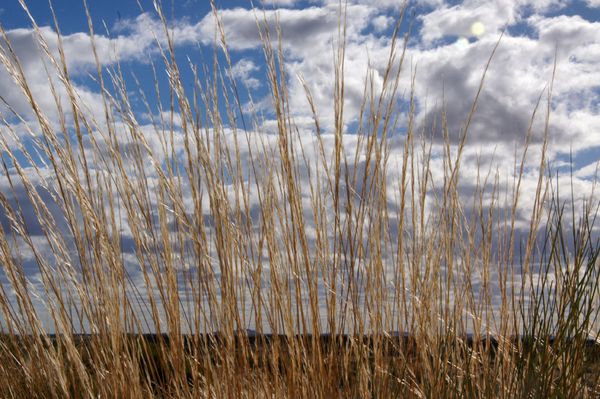
Spinifex is not good for much: it’s essentially inedible, but it provides havens for all kinds of critters, and it can produce a resin that the Aborigines make effective use of as a glue. Its long leaves can be beautiful, but they are high in silica and can pierce the skin of men and beasts, often leading to infections.
Spinifex was the bane of every early expedition into the Australian deserts. David W. Carnegie, pioneering and prospecting around the outback around the end of the nineteenth century, titled his account of his adventures Spinifex and Sand. It seems that he and his companions would sit around in camp after a long day and occasionally compose poetry; he regales the reader with “the one considered by us the best",” and it begins:
I will sing you a lay of W.A.
Of a wanderer travelled and tanned
By the sun’s fierce ray through the livelong day
In the Spinifex and Sand
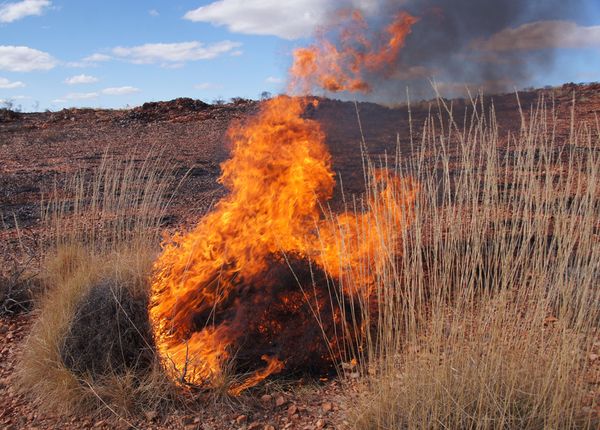
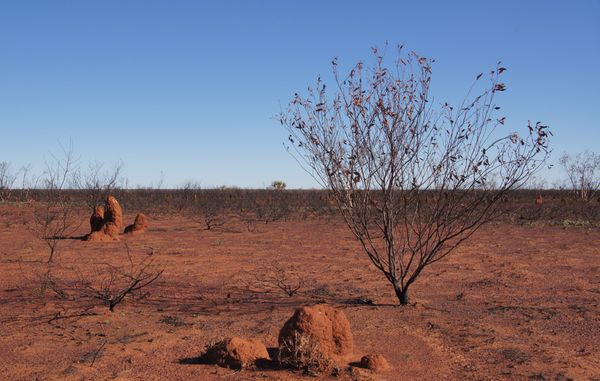
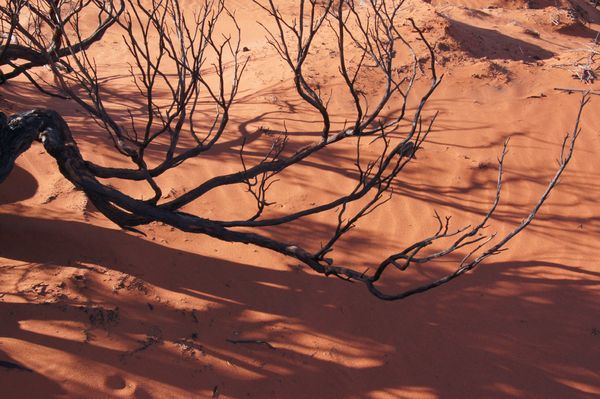
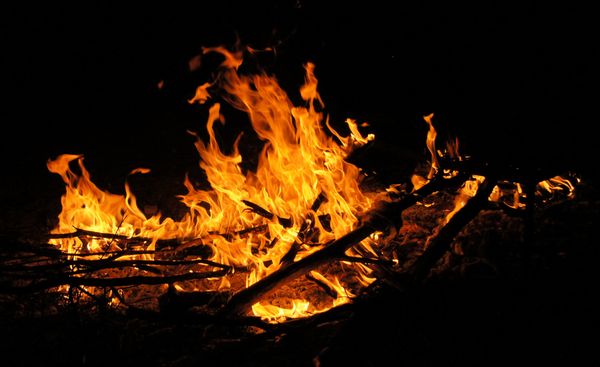
And spinifex burns – really, really well, and with an indescribably intense heat. We set fire to an isolated clump (the photo at the head of this post), and the rate at which the conflagration took off, and the heat it put out, was dramatic. Any spark, natural or otherwise, will set off a fire that rapidly consumes great swaths of the landscape – creating the brush strokes of the satellite image and a new, starkly barren and devastated landscape (of the mounds, probably more later):
Carnegie writes of travelling among the dunes, the sand ridges:
Before long we were among the ridges. What a desolate scene! Ridge upon ridge of sand, black from the ashes of burnt spinifex. Not a sound or sign of life, except the grunts of the camels as they strained up the sandy slopes. Presently, we sighted a newly lighted hunting smoke, not a mile from us; with my field-glasses I could see the flames of the fiercely burning spinifex lapping the crest of a high sand ridge.
And there is a clue as to origin of fire in the sand – yes, today, many fires are caused by lightning strikes, but historically, and still today, they are started by the indigenous inhabitants as both a method of hunting, to drive the critters out of their spinifex havens and burrows, and as a form of rotational land management. We describe Aborigines as nomadic, but they will deny this. Rather, an individual group will move around within their own well-defined territory, gathering food, hunting, and then burning the area before moving on, a pattern that is cyclic, the group eventually returning to the original tract once it has renewed itself post the burn. And this renewal is astonishing – in any but the most recent areas of burn, the green shoots are everywhere, thriving in their newly spinifex-free environment:
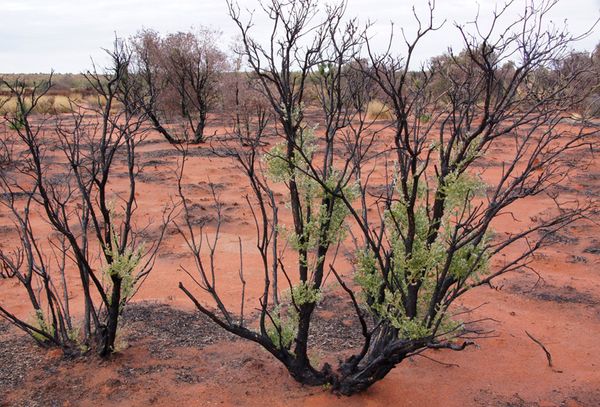
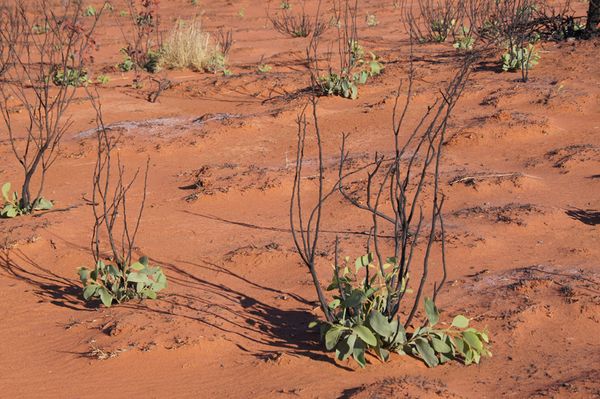
I find these images of renewal and rebirth exciting: compelling testimony to resilience and adaptation, and to the indigenous people’s intimate understanding of their land and its management.
And then, of course, there’s the other kind of conflagration: thanks in large part to the destruction and renewal in the desert, there’s always plenty of material for the very necessary camp fire in the cold evenings.
Comments
No comments yet.