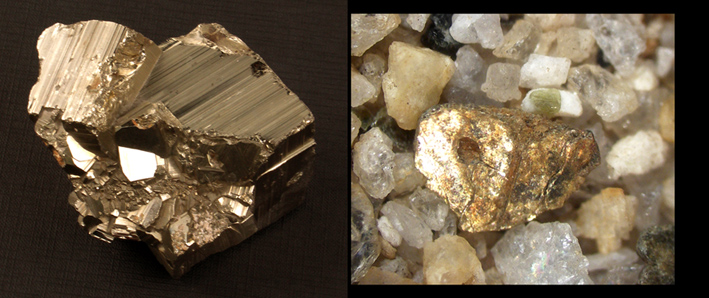
At the end of my last post on granular segregation and placer mineral deposits, I included a photo of a sand sample from Yosemite that is reputed to contain flakes of gold, with a slightly enigmatic candidate grain. Lockwood at Outside the Interzone and the Lost Geologist kindly commented with testing advice - press the grain with a needle and, because gold is relatively soft and malleable, it will deform, the needle leaving an imprint; mica, being flaky and brittle, will split apart. I couldn’t find the same grain, but found a similar one, and gave it a poke with a needle. The point left a dent - aha, I thought, my hopes rising. But, on applying further pressure, the grain fragmented, flying apart into 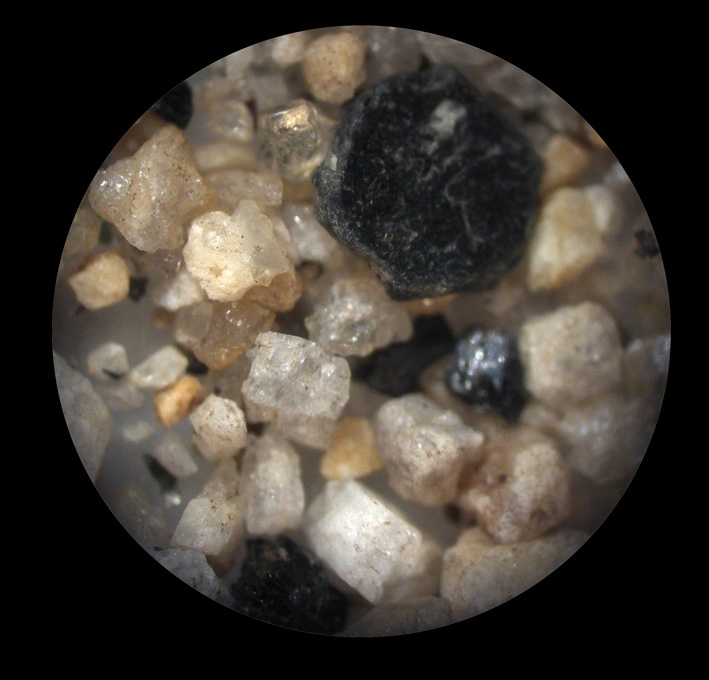 form a significant membership of this granular tribe - they’ll rot out of existence as time goes by.
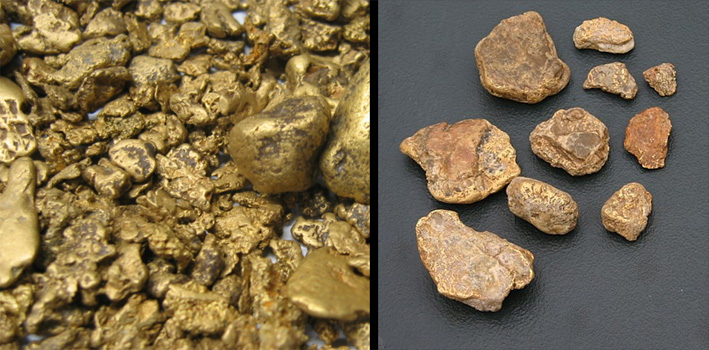
So, all that glitters is not gold. Of course, pyrite, the shiny yellow iron sulphide mineral, is the traditional “fool’s gold” (left in the photo above) but I’m not that foolish: if I found something that looked like the placer gold shown on the left, below, I like to think that I might have leapt to the correct conclusion. But the little muscovite grains (above, right) do sparkle in a most alluring way - I came across the second photo, below right, which purports to show placer gold nuggets and, while I’m no mineralogist, they look a bit suspicious. But then most prospectors know a lot more about what they’re doing than I do.
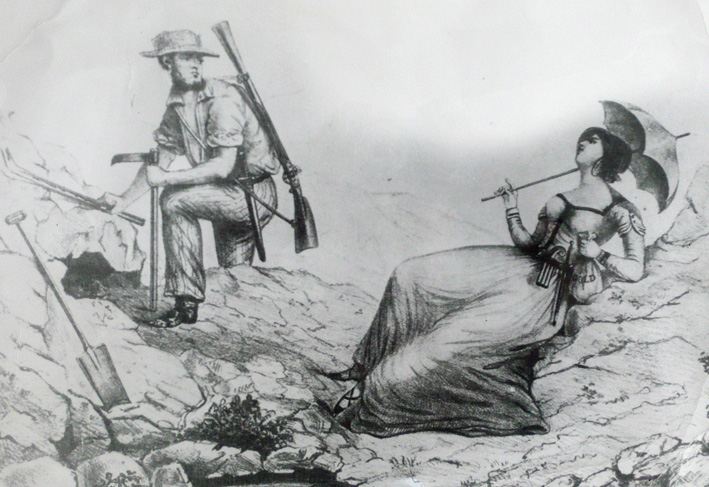
My wife would agree. When we got married, she found the old picture below and felt that, with a geologist for a husband, this would be illustrative of the way her life would evolve (note the contents of the woman’s bag). We still, ever-hopefully, have this picture on the wall, but alas, so far …
Comments
No comments yet.